VITAE
What do we mean when we call something alive? Biology has its own answer, but step outside the lab and things get messier — communities have always understood life through ritual, kinship, land and story, categories that rarely map onto a textbook definition. That messiness is harder to ignore today, as ecosystems collapse faster than our concepts can keep up, and as AI and synthetic biology start blurring the line between living and non-living altogether.
VITAE takes that blur seriously rather than tidying it away. My premise is that the boundary between living and non-living was never purely scientific, it’s also a question of interpretation, of how a community reads agency or animacy into the world around it. A river can be a resource, a habitat, or a relative, depending on who’s looking. I want to understand how these different readings work, and where they might speak to one another.
I work across four fields, laid one on top of the other like a relay: anthropological fieldwork with Indigenous communities in Colombia lays the ground; biosemiotics reads that ground for the signs through which life and agency are made meaningful; cognitive linguistics listens for how life gets spoken about, in Indigenous discourse and in scientific discourse alike, tracing the metaphors each one runs on; and philosophy of biology holds the findings up against existing models of life to see which of them actually bear weight.
This has real legal stakes. Colombia’s Constitutional Court recognised the Atrato River as a subject of rights in 2016, grounding the ruling in the Afro-Colombian and Indigenous understanding of the river as a living entity. VITAE is built to generalise that kind of move, mapping where scientific and Indigenous understandings of life align and diverge, to give environmental governance a broader basis for protecting what current legislation still struggles to see as alive.
The research feeds into a documentary film and travelling exhibitions in Bogotá and Prague, developed with the communities themselves, so that Indigenous knowledge holders help shape how the findings are told.
VITAE is funded by the European Union (HORIZON-MSCA-2025-PF-01-01) under a Marie Skłodowska-Curie Global Postdoctoral Fellowship, with research phases at Universidad EAN (Bogotá) and Charles University (Prague).

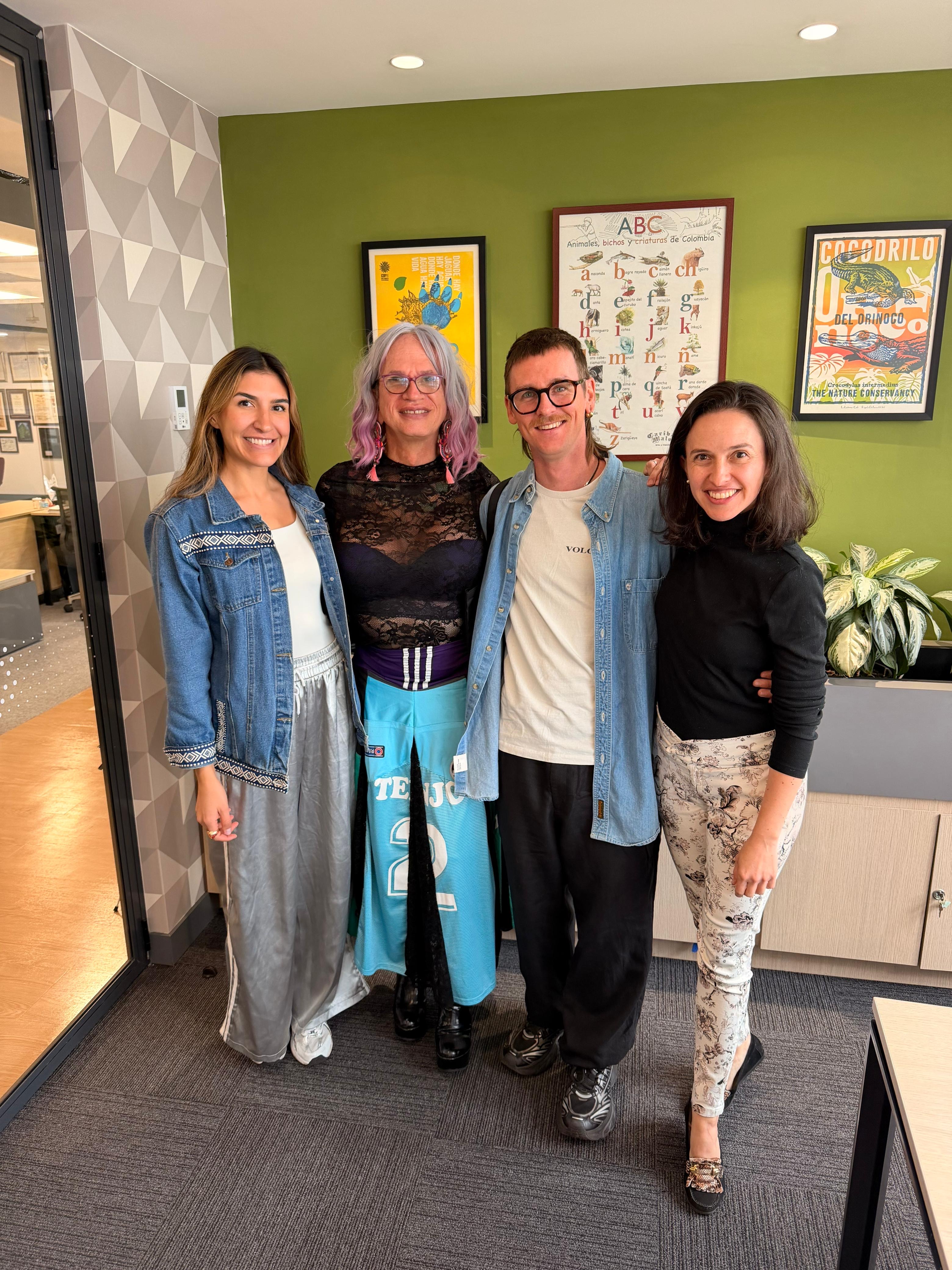

Presentations given to introduce the project:
-
10/04/2026, VITAE, “Successful MSCA-PF GF Proposal”, Charles University.
-
25/06/2026, VITAE, “Skill transfer event for writing MSCA applications”, Center for Environmental and Technology Ethics - Prague (CETE-P)
